Skip to content

The Dealership Isn't Disappearing. It's Changing.

October 22, 2026

The way people buy vehicles has changed.

Customers can compare models, watch reviews, explore specifications, configure vehicles and read other people's experiences without ever stepping inside a dealership. Increasingly, they can arrive at a physical space having already formed a strong opinion about what they want.

That might make it tempting to question the role of the dealership altogether.

But the shift towards digital research does not mean physical environments are becoming less important. It means their role is changing.

The dealership is no longer simply somewhere to browse a range of vehicles and speak to a salesperson. It can become a place where customers experience the brand, understand the product, build confidence and move from online consideration towards a real-world decision.

From showroom to experience

Digital channels are incredibly effective at providing information.

Physical spaces offer something digital cannot replicate in quite the same way. They allow customers to experience a vehicle at full scale, understand the materials and finishes, see how different models compare and get a genuine sense of what it would be like to own one.

That makes brand immersion increasingly important.

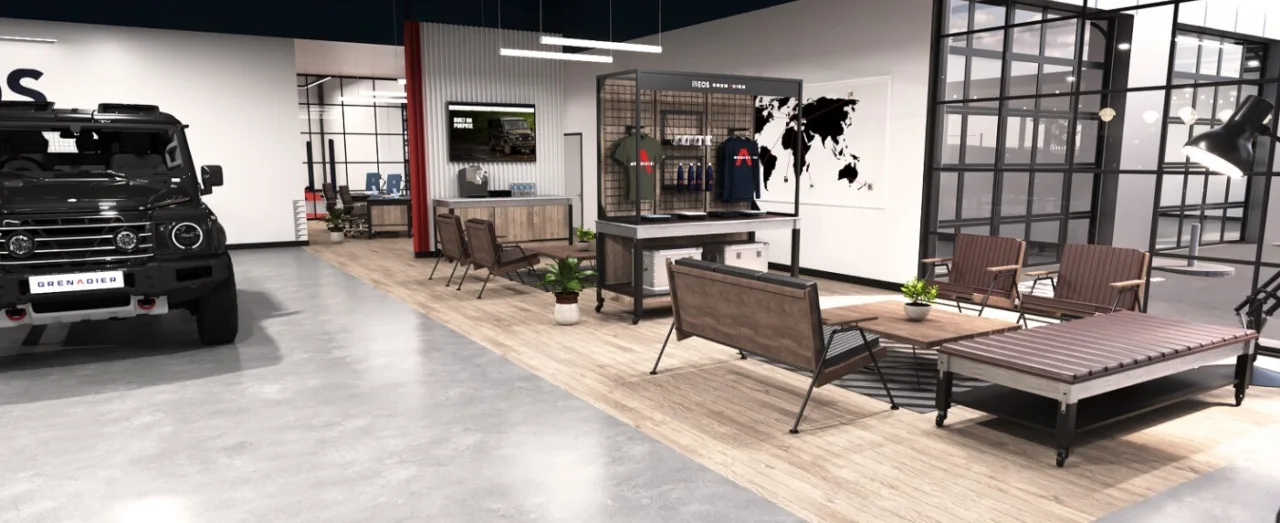
A dealership should communicate more than what a brand sells. Its architecture, interior design, graphics, product presentation and customer journey can all contribute to how the brand is perceived.

The result is a physical environment that feels like an extension of the brand rather than simply a place where products happen to be displayed.
The Dealership Isn't Disappearing. It's Changing.

Product discovery still happens in person

Online research can help customers narrow their choices, but physical environments can help them make sense of those choices.

Seeing a vehicle online is very different from standing next to it.

Customers can explore its proportions, sit inside it, compare different models and discover details they might not have considered during their initial research.

This becomes particularly important when brands are introducing new products, new technologies or entirely new approaches to mobility.

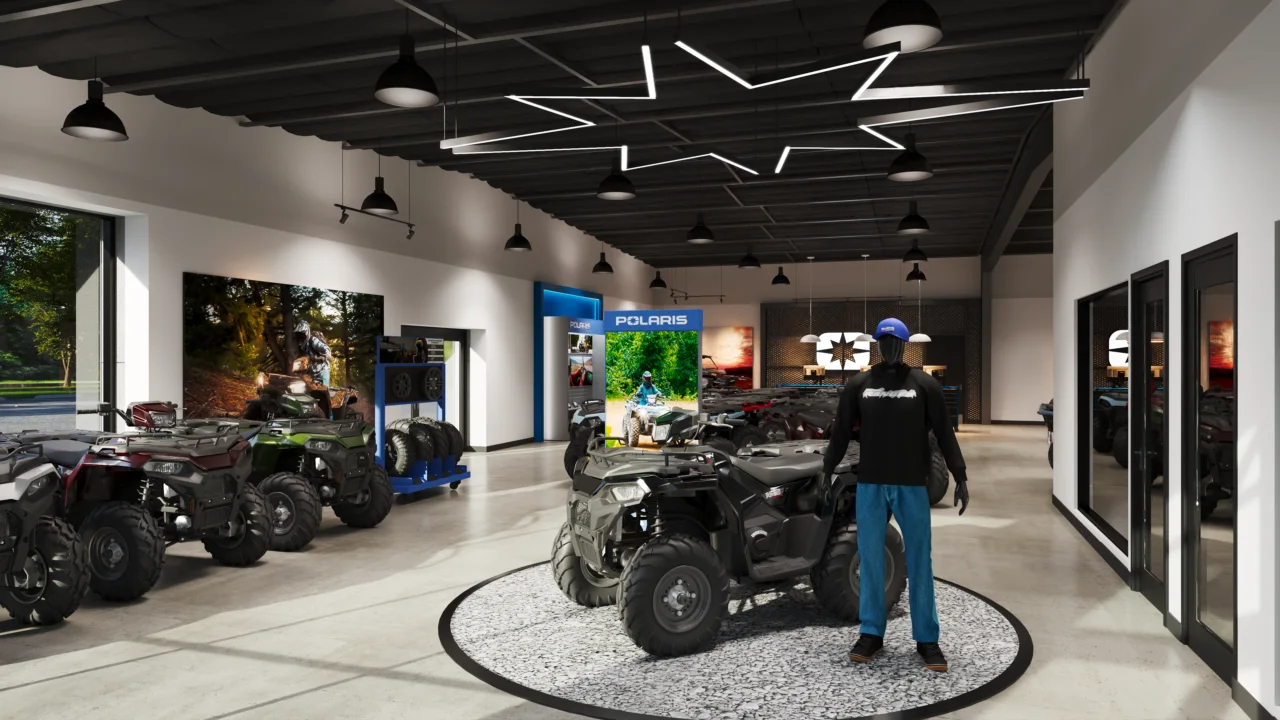
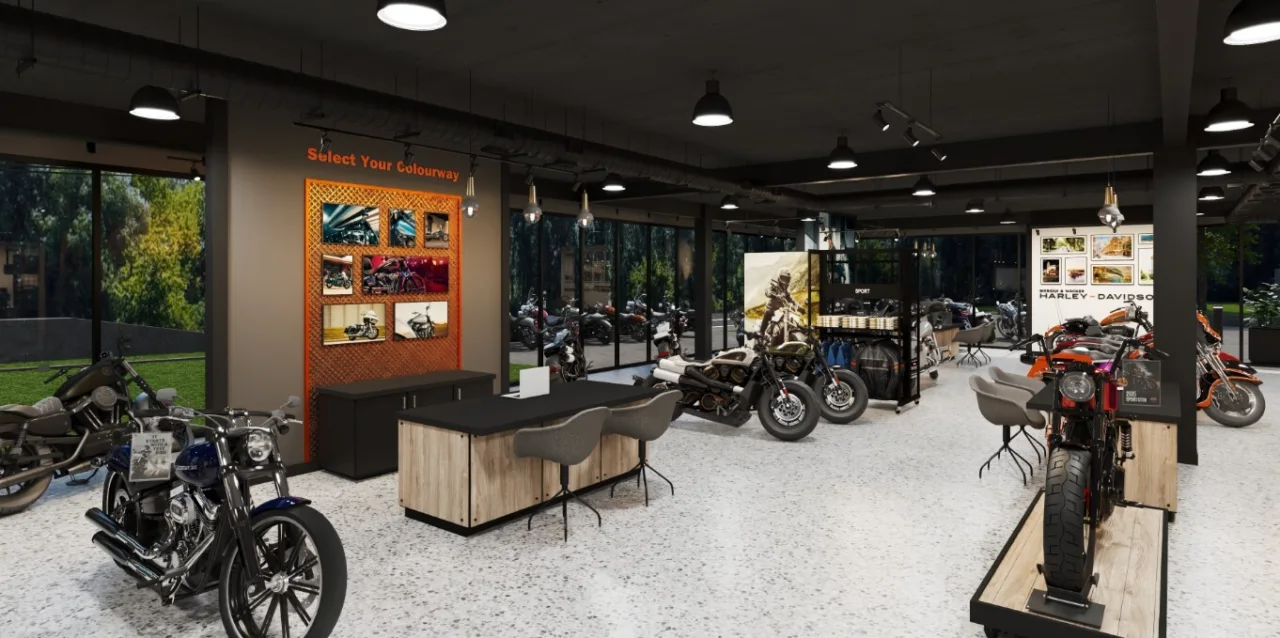
Fresh's work across brands including Harley-Davidson, Polaris, Lucid and NIO has provided experience of creating environments where product presentation and customer understanding need to work together.

The design of the space can help determine what customers notice first, where they go next and how much information they encounter along the way.


The dealership as an education space

One of the biggest changes facing automotive retail is the growing complexity of the product itself.

Electric vehicles bring new questions around charging, range, battery technology and ownership. For some customers, understanding the technology is just as important as understanding the vehicle.

This creates another role for the physical dealership.

Rather than simply displaying products, the environment can help explain them.

EV education might involve interactive displays, demonstrations, dedicated charging areas or simply creating space for meaningful conversations between customers and knowledgeable staff.

The physical environment can make unfamiliar technology feel more accessible.

That can be particularly valuable when a customer has researched a product online but still has questions they want answered before making a decision.

The Dealership Isn't Disappearing. It's Changing.

Building confidence

Buying a vehicle is still a significant decision.

Even when much of the research happens online, customers may want reassurance before committing. They might want to sit in the vehicle, take a test drive, speak to someone who understands their needs or simply spend time in an environment that makes the decision feel more tangible.

This is where customer confidence becomes an important part of dealership design.

The environment should make the journey feel intuitive rather than overwhelming. Product information should appear at the right point in the journey. Staff should have the space to engage with customers rather than simply process transactions.

The objective is not to replicate the online journey in a physical space.

It is to provide something that online channels cannot.

The experience doesn't end with the sale

The role of the dealership also extends beyond the point of purchase.

Handover is an opportunity to turn the excitement of buying a vehicle into the beginning of the ownership experience. Service and aftersales provide another reason for customers to return to the physical environment.

These moments matter.

A dealership that feels considered during the research and purchase process but becomes purely functional afterwards is missing part of the customer relationship.

Service areas, waiting spaces, handover environments and customer amenities can all contribute to how a brand is experienced throughout ownership.

The physical environment therefore has a role long after the initial transaction.


The Dealership Isn't Disappearing. It's Changing.

Creating community

There is also an opportunity to think beyond the traditional customer journey altogether.

For some automotive brands, the dealership can become a place where communities form.

Events, product launches, owner gatherings, educational sessions and brand experiences can give people reasons to visit when they are not actively considering a purchase.

This is particularly relevant for brands where community and lifestyle are closely connected to the ownership experience.

The question then changes from "How do we get people into our dealership?" to something more interesting.

"What would make people want to come here?"

That could lead to very different approaches to dealership design.

A different role for the dealership

Digital research has not made the dealership irrelevant.

It has removed some of the traditional reasons people needed to visit one.

Customers no longer necessarily need to walk through the door to discover what vehicles are available, compare specifications or begin their research.

That allows physical environments to focus on the things they do particularly well.

  • Immersing customers in the brand.
  • Helping them discover products.
  • Explaining new technology.
  • Creating confidence.
  • Delivering memorable handovers.
  • Supporting service and ownership.
  • Building community.

Fresh's experience across Harley-Davidson, Polaris, Lucid and NIO demonstrates how different automotive brands can use physical environments to support these changing customer needs.

The dealership of the future may therefore look very different from the showroom of the past.

But that does not mean the physical environment is disappearing. It means we need to think more carefully about what it is there to do.

For automotive brands, the most effective dealership may not be the one that simply displays the most vehicles.

It may be the one that gives customers the strongest reason to step through the door in the first place.

Bring the thinking into your project.

Related serviceConcept Design & Design DevelopmentRelated workExplore our featured projects
Discuss your project

Global reach. A local conversation.

Start here. We’ll connect you with the right team.

hello@fresh.international

Prefer a local team? Choose your region.