You’ve worked with brands across multiple continents. What challenges are universal?
Working on projects across different countries has shown me that the most challenging part isn't simply coming up with a great idea. It's about turning that idea into a practical, repeatable experience that still feels meaningful in each location.
A wonderful concept needs to stand up to leases, budgets, local regulations, supply chains, contractors, daily operations, and, most importantly, the customers who visit. That's when design truly becomes a functional business system.
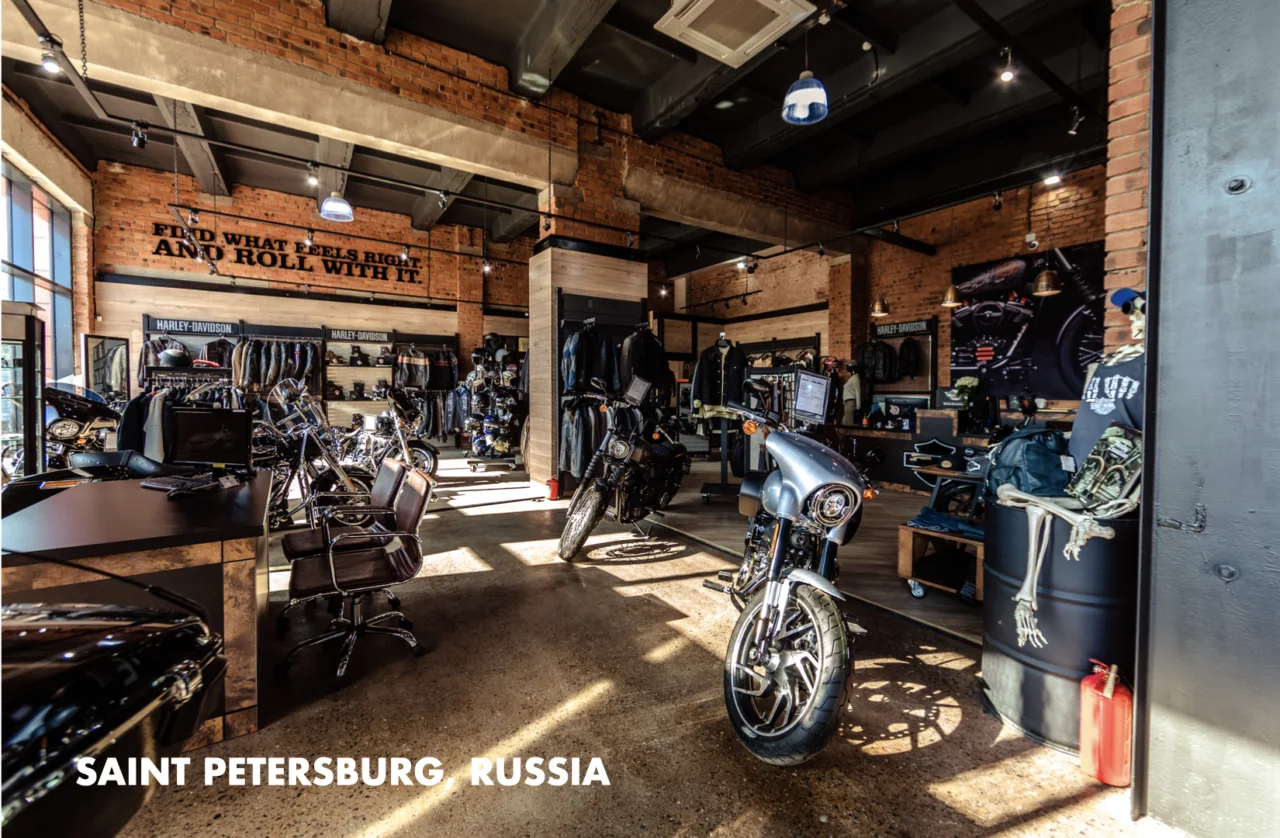
Our work with Harley-Davidson at over 600 locations highlights this perfectly. Every dealership should clearly embody Harley-Davidson, yet also reflect its riders, community, and region. There's a difference between consistency and sameness. The goal is to deliver the same brand promise, even if the floor plans aren’t identical everywhere.
What differences surprise brands when they expand internationally?
US brands often expect Europe to be one uniform market, while European brands sometimes assume the US has a single set of rules. Sadly, neither story is quite accurate.
Traveling through Europe reveals a tapestry of diverse planning requirements, labor practices, property conditions, and cultural expectations, even between towns just ten miles apart. Projects often need to consider smaller footprints, historic buildings, preservation restrictions, and highly localized supply chains.
When European brands step into the US, they face new challenges: longer distances, more car-focused customer journeys, larger sites, different accessibility and liability standards, and higher expectations for convenience, speed, and efficiency.
One of the most underestimated differences lies in how projects are surveyed, documented, approved, and permitted. While a concept can make it across the Atlantic overnight, permit-ready drawings take much longer. That’s why involving local expertise early, during site selection and due diligence, is crucial, rather than bringing in specialists at the last minute to fix assumptions already built into the design.